Luxury slab and tile pairings Coachella Valley homeowners are choosing now feel warmer, more tactile, and more personal than the cool gray interiors of the last decade. Quartzite, richly veined stone, warm whites, sand tones, sage, handmade ceramics, textured tile, and large continuous surfaces are creating rooms that look refined without feeling overly polished.
The key is deciding which material leads. A statement island or backsplash may call for quieter tile, while a restrained slab can leave room for handmade color and texture. For a closer look at using natural movement as the focal point, explore these bookmatched stone ideas for Coachella Valley kitchens.
What Luxury Surface Trends Are Defining Coachella Valley Homes in 2026?
The leading 2026 luxury surface trends combine one expressive material with one quiet partner. The strongest pairings are natural quartzite with handmade tile, full-height slab backsplashes with minimal tile, warm stone with muted green or earth-toned tile, and honed or leathered slabs with dimensional tile, all built on warm neutrals and fewer grout lines.
These pairings reflect a larger shift away from cold, flat, highly uniform interiors. Homeowners want surfaces that show visible stone movement, tactile finishes, and organic color.
Industry data supports what designers are seeing locally. The NKBA 2026 Kitchen Trends Report points to neutrals, organic and natural design, quartzite, and slab or solid-surface backsplashes among the leading directions.
In Coachella Valley homes, those national trends take on a regional flavor. Warm stone and earthy tile respond beautifully to desert light, and large-format surfaces suit the open, indoor and outdoor floor plans common across the valley.
| Pairing | Best Room | Hero Material | Supporting Material | Overall Look | Maintenance Consideration |
|---|---|---|---|---|---|
| Quartzite with handmade tile | Kitchen | Veined quartzite island or counters | Warm white or sage handmade ceramic | Organic, collected | Seal stone as recommended; confirm tile glaze care |
| Slab backsplash with minimal tile | Kitchen, bar | Full-height slab backsplash | Simple tile in secondary zones | Seamless, architectural | Fewer joints; stone care depends on the slab |
| Warm stone with muted green tile | Kitchen, bath, powder room | Warm quartzite, marble, or limestone look | Sage, olive, or clay tile | Soft, nature-inspired | Compare undertones in natural light |
| Honed or leathered slab with dimensional tile | Kitchen, bar, fireplace | Matte or textured slab | Fluted or ribbed tile | Tactile, low-glare | Textured finishes may need specific cleaning |
| Large-format surfaces with one artisan detail | Whole home | Large-format slab or porcelain | One artisan tile feature | Calm, curated | Simple base surfaces; detail stays contained |
Pairing 1: Dramatic Quartzite With Quiet Handmade Tile
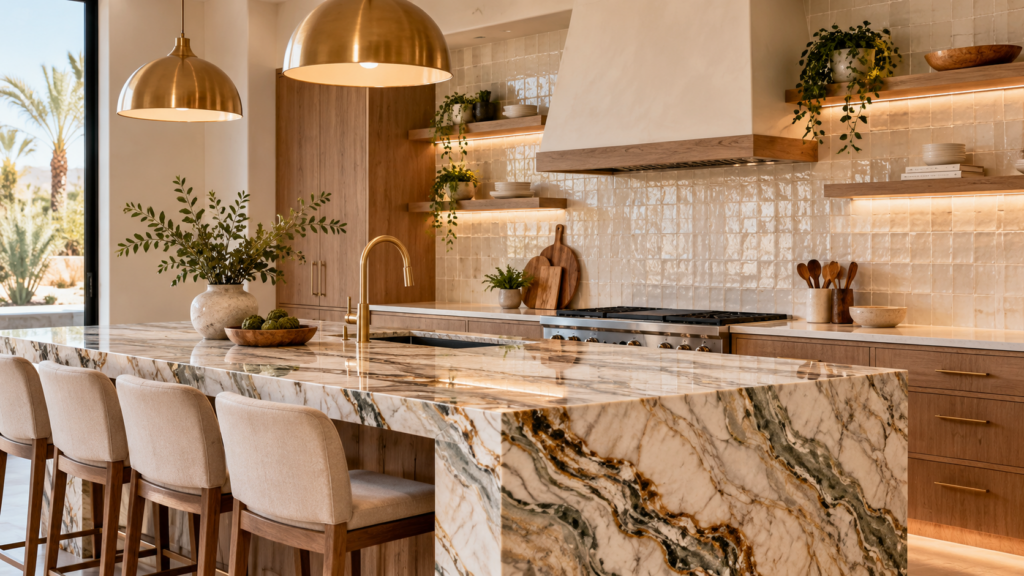
Quartzite with strong veining makes an unforgettable island or countertop. The challenge is knowing what to put beside it.
The answer is usually something understated. Handmade ceramic tile in warm white, cream, sand, sage, or clay adds texture and craftsmanship without fighting the stone. Let one material provide movement and the other provide texture.
Avoid heavily patterned tile directly beside already dramatic stone. Two loud surfaces compete for attention, and the room loses the calm that makes intentional slab design feel expensive.
Pairing 2: Full-Height Slab Backsplash With Minimal Tile
Full-height slab and solid-surface backsplashes continue to gain momentum, particularly behind ranges and on focal kitchen walls. A continuous slab lets veining run uninterrupted from counter to ceiling, eliminating grout lines on the wall that matters most.
That doesn’t mean tile disappears. It simply moves. Coffee bars, pantry walls, secondary prep zones, and adjoining spaces become the place for tile to add character, while the main kitchen wall stays seamless.
When the slab backsplash is the hero, keep the supporting tile simple in shape and close in undertone. A matte cream ceramic in the pantry or a subtle textured tile at the bar connects back to the stone without repeating it.
Pairing 3: Warm Stone With Sage, Olive, or Earth-Toned Tile
Warm stone and muted green tile is one of the most sophisticated pairings in luxury stone and tile Coachella Valley projects right now. Think cream limestone looks, warm quartzite, marble, travertine-inspired porcelain, or more understated granite alongside sage, olive, clay, terracotta, or mineral tile.
Keep the palette dusty and complex rather than saturated. A softly variegated olive glaze reads as refined, while a bright, flat green can quickly feel dated.
Desert light amplifies undertones. A green that looks gray in a showroom may read warmer at home under afternoon sun, which is why comparing materials at full scale is essential before committing.
Pairing 4: Honed or Leathered Slabs With Dimensional Tile
Matte, honed, and leathered slab finishes have a subdued, tactile quality that pairs naturally with fluted, ribbed, dimensional, or hand-textured tile. Together, they create depth through texture rather than shine.
This pairing also manages glare. Polished surfaces can bounce intense desert light around a room, while softer finishes absorb it. For a deeper look at how each finish behaves in bright light, see this guide to slab finishes for Palm Desert kitchens.
Pairing 5: Large-Format Surfaces With One Artisan Detail
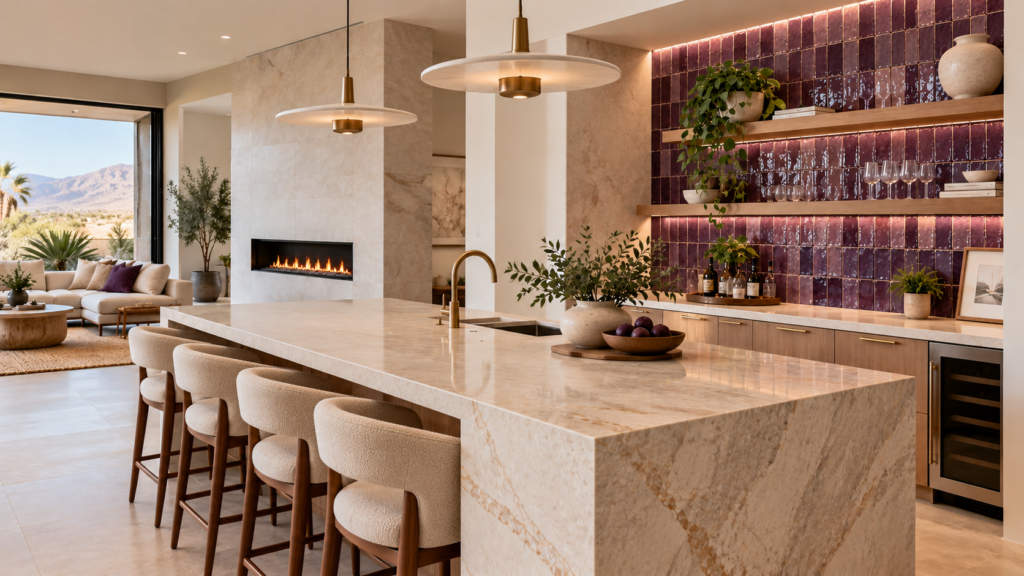
Broad, low-grout surfaces create a calm architectural base. Large-format slabs or porcelain on floors, counters, and walls let the eye rest.
Then concentrate craftsmanship in one highly visible area: a wet bar, a niche, a powder room backsplash, a fireplace inset, or a kitchen feature wall. This creates the collected look discerning clients want without turning the home into a catalog of competing trends.
The contrast is what gives the artisan detail its power. Surrounded by quiet, continuous surfaces, a handmade tile wall reads as a deliberate design moment rather than one pattern among many.
How to Make Trend-Forward Materials Feel Timeless
Start by identifying the permanent foundation of the home: flooring, primary countertops, cabinetry, and large wall surfaces. These are the hardest and most expensive elements to change, so they deserve the most timeless choices.
Use more directional color, pattern, or handmade tile in smaller areas that can evolve independently. A powder room backsplash or bar wall can be updated in a few years without disrupting the rest of the house.
Luxury often comes from editing and proportion, not from choosing the most expensive material in every category. Following 2026 luxury surface trends works best when the trend is a layer, not the entire structure.
Frequently Asked Questions About Luxury Slab and Tile Pairings
What slab and tile combinations are trending in 2026?
Warm natural stone paired with handmade or textured tile is one of the strongest directions. Quartzite, marble looks, warm neutrals, sage, clay, large-format surfaces, and dimensional ceramics all fit the current shift toward organic design. The most sophisticated rooms usually combine one visually dominant material with a quieter supporting surface.
Is quartzite still popular for luxury kitchens?
Yes. Quartzite remains a strong choice for luxury kitchens because it combines genuine natural variation with durability that can suit many countertop applications when properly selected. NKBA’s 2026 research also places natural quartzite among the leading countertop and backsplash materials, particularly as homeowners move toward natural and organic design.
What tile looks good with a dramatic stone slab?
Choose tile that supports rather than competes with the slab. Warm white handmade ceramic, lightly textured neutral tile, subtle zellige-style surfaces, or restrained large-format porcelain can work beautifully beside expressive stone. Pull one secondary undertone from the slab instead of trying to reproduce every color or vein within it.
Are slab backsplashes still in style?
Yes. Full-height and solid-surface backsplashes remain a prominent luxury kitchen direction because they create fewer visual interruptions and allow stone movement to continue vertically. They work especially well behind a range or on a focal wall, while tile can add character in secondary zones such as bars, pantries, and niches.
How do you mix natural stone and artisan tile?
Begin by assigning each material a role. Let expressive stone provide movement and scale, then use artisan tile for texture, color, or handcrafted detail. Compare full slabs with several tile pieces at the same time, since a single tile sample can’t show the tonal variation or overall rhythm of the finished installation.

Create a Material Palette, Not a Collection of Samples
The most current luxury interiors aren’t defined by one trend. They succeed because stone, tile, wood, metal, color, and light feel intentionally related.
The best luxury slab and tile pairings Coachella Valley homes can showcase start with one exceptional slab and the right supporting tile. That combination creates more impact than filling every surface with competing statement materials.
Start with the natural movement in our bookmatched stone ideas for Coachella Valley kitchens, then compare how polished, honed, matte, and textured options behave in desert light with our guide to slab finishes for Palm Desert kitchens.
Visit Slab Studio by Fina in Palm Desert to build your palette from full-size materials. You can see the full movement of each slab, compare finishes in person, and purchase directly from the studio and warehouse instead of relying on small samples.